Playing history
Say whether you are completely new, returning after a break or currently playing regularly. If you compete, mention the level of games you normally find comfortable or challenging.
Tell us what kind of squash you currently play, whether you want coaching or games, and when you normally prefer to be on court.
Use the form for training questions, playing-level guidance and visit requests. Contact details are also listed below as plain text.

You do not need to know your formal level. A short description of how often you play and what your rallies currently look like is enough to start the conversation.
You do not need specialist vocabulary. A few practical details make it much easier to understand what kind of session is relevant.
Say whether you are completely new, returning after a break or currently playing regularly. If you compete, mention the level of games you normally find comfortable or challenging.
Describe what usually happens in a rally. For example: length breaks down under pace, backhand preparation feels late, movement into the front corners is awkward or points end before you can build pressure.
Choose a practical outcome such as learning the rules, rallying more consistently, improving movement, preparing for club matches, developing one specific shot or understanding tactics against different styles.
Tell us whether you are mainly interested in a first orientation, group practice, individual coaching or organised games. If you are unsure, the description of your level and goal is enough to start.
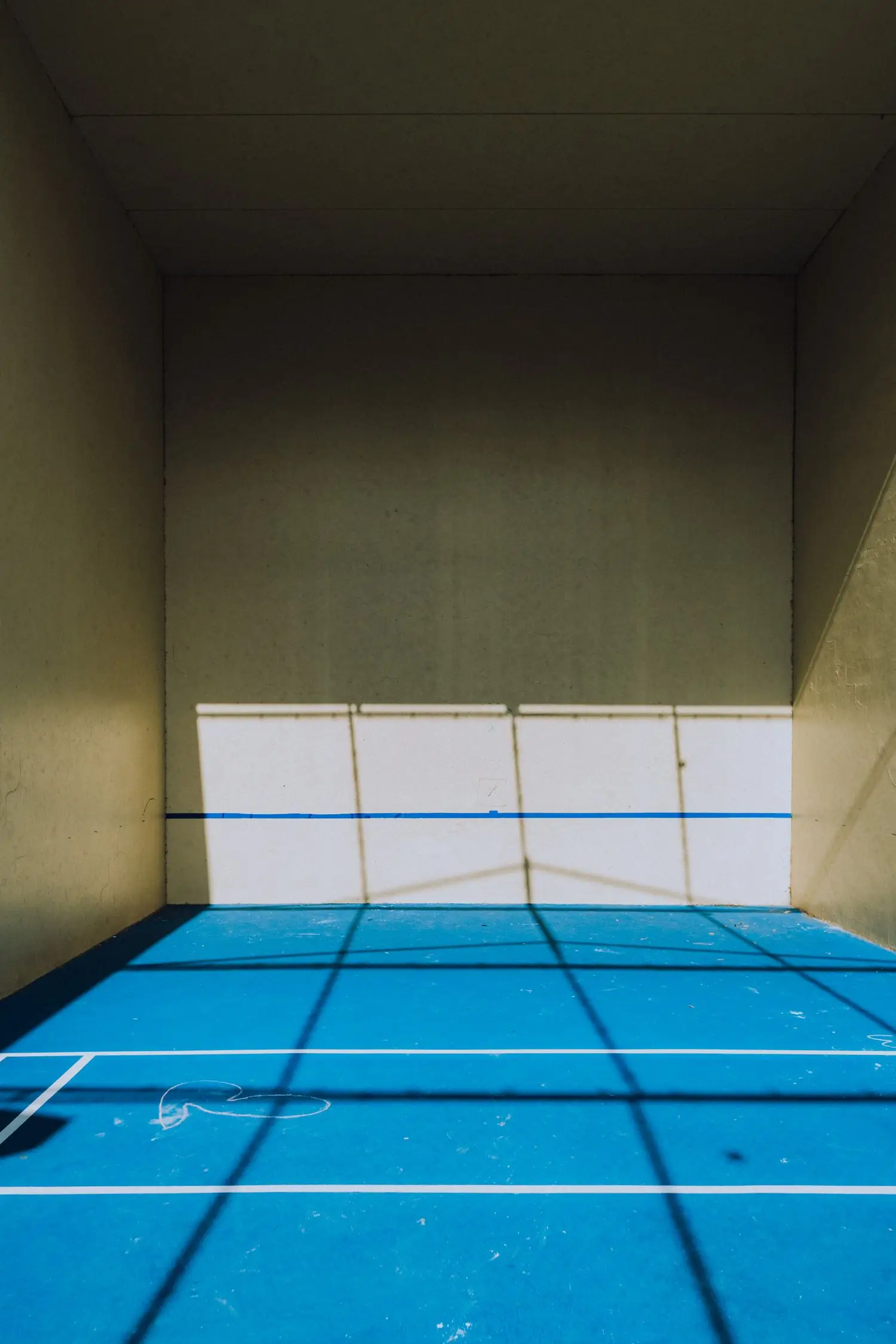
The first visit is easier when equipment, timing and expectations are simple. The aim is to spend court time learning and playing, not solving avoidable logistics.
Arrive early enough to change shoes, find the court and settle before the session begins. Clean indoor non-marking shoes are important for grip and court care. Comfortable sports clothing that allows lunging and rotation is usually sufficient. If you already have a racket, bring it; if not, mention that when arranging the visit so equipment options can be discussed.
New players can expect basic orientation around the court, scoring and safe movement before longer rallies are introduced. Experienced players can use the first session to establish pace, consistency and current priorities. In either case, the most useful starting point is an honest picture of what you can do now rather than trying to fit yourself into a formal label.
If you already keep notes from matches or practice, you can mention one recurring pattern rather than sending a long history. Examples might include losing control when the pace increases, struggling to recover after a short shot, finding the backhand corner difficult or wanting to create more pressure from a good length. Specific situations give a clearer starting point than a broad request to “improve everything.”
Clear information also helps keep the first court conversation focused on the parts of squash that matter most to you.
These are the details that help a new player choose a suitable starting point.
No. First Court is built for people who need scoring, court movement and basic racket skills explained from the beginning.
Yes. Describe your rally consistency, recent playing frequency and the areas you want to improve so we can suggest a suitable session.
Yes. Individual sessions can target a specific shot, movement pattern, serve-return issue or tactical situation.
Describe the longest rallies you can normally sustain, whether you can serve and return consistently, how often you play and which parts of the court feel most difficult. Those practical details are more useful than guessing a label.
Yes. If you already practise with someone, mention both players' experience and the type of work you want to do. Partner sessions can be useful for repeatable patterns, conditioned rallies and learning how to give each other a consistent feed.
That is normal. A player may begin with technique and later discover that match decisions, movement or serve return is the bigger limitation. Training can be adjusted as new patterns become visible, so the starting request does not lock you into one theme.